Thinking about a brand-new home in West London or the Home Counties?
Whether you are weighing up a developer-led purchase or planning a self-build, getting to the right answer comes down to clarity on value, quality, design, planning, and delivery. This guide walks you through the pros and cons, how to negotiate, the drawings you will need, realistic costs, and how to keep your project on track from first sketch to keys in hand.
Is it worth buying a new build home?
It can be, if the home, location, and specification suit your life and budget. Here is how new builds typically stack up.
Pros:
- Lower running costs with better insulation, airtightness, and energy-efficient systems.
- Fewer immediate repairs, with builder warranties and NHBC or similar cover.
- A clean slate for layout and finishes, often with options to personalise.
- No upwards chain, which reduces risk and stress.
Cons:
- Plot sizes can be smaller than period homes, especially in dense parts of West London.
- Quality varies between developers, and snagging is common.
- New estates may take time to mature, which can affect initial kerb appeal and resale.
- Premium pricing can be built into list prices, so negotiate.
If you need character features or larger gardens, a renovation or extension might deliver better value. If you want energy performance, warranties, and a ready-to-move-in solution, a new build can be a smart choice.
For self-builders, a bespoke new home can unlock the layout you actually need, but it demands more planning, patience, and a strong team.
Can you negotiate down a new build?
Yes, you often can. Developers tend to focus on headline sale prices, so incentives are common.
- Try: Timing: End of quarter or financial year is when sales targets bite.
- Comparables: Use recent local sales to support your position.
- Incentives: If price movement is limited, ask for upgrades, flooring, landscaping, or stamp duty contributions.
- Snagging leverage: Reserve the right to hold back a retention until significant snags are resolved. Mortgage ready: Have your agreement in principle and solicitor lined up to present as a low risk buyer.
For self-build plots, negotiation hinges on planning potential, site constraints, and local demand. A clear feasibility study strengthens your case.
What drawings are required for a planning application?
For a typical new build planning application, you will usually need:
- Location plan and block plan, scaled and compliant with local authority standards.
- Existing site plans and elevations, including site sections and context.
- Proposed floor plans, elevations, and roof plans.
- Street scene visuals or verified views if the setting is sensitive.
- Design and Access Statement explaining the design intent, scale, appearance, and how you have addressed policy.
- Heritage Statement if in a conservation area or near listed buildings.
- Ecology, arboricultural, transport, flood risk, and drainage documents as required by the site.
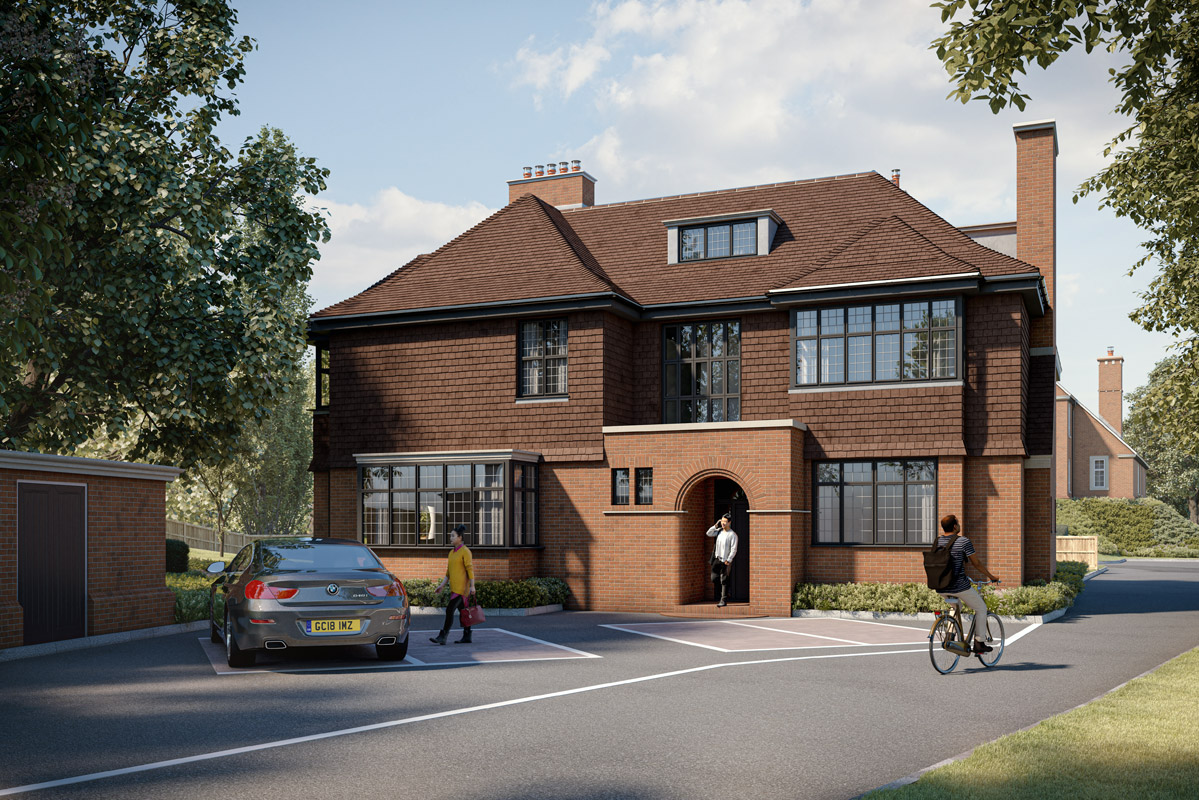
In Richmond, Weybridge, and surrounding boroughs, expectations are detailed, so coordination matters. High quality 3D visuals can help planning officers and neighbours understand scale and massing. If you are preparing a planning application locally, you may find our support useful for a smoother route to approval.
What drawings and technical information do you need after planning?
To build with confidence, you will need:
- Technical drawings and schedules, including dimensions, sections, specifications, and coordination with structural engineer designs.
- Building Regulations drawings and notes, covering structure, fire safety, thermal performance, drainage, ventilation, and more. Details for junctions, insulation, airtightness, and thermal bridges to meet energy standards.
- Internal layouts and kitchen, bathroom, and lighting proposals to lock down services early.
- Tender package information, so builders can price like for like.
Immersive 3D walkthroughs help you catch layout issues, storage needs, and daylight concerns before you pour a foundation. They also reduce costly changes on site.
How much does it cost to design your house?
Design costs vary by scope and service level. As a guide, many homeowners budget architectural design at around 5 percent of build cost with us, compared to the 8 to 12 percent range often quoted by traditional practices.
Factors that influence fees include:
- Complexity of the site, access, and ground conditions.
- Size of the home and level of bespoke detailing.
- Number of planning iterations and stakeholder engagement.
- Extent of 3D visualisation, VR, and interior layout development.
- Coordination with consultants, such as structural, MEP, energy, and drainage. To control total project spend, set a realistic brief early, commit design decisions before tender, and use 3D to pressure test your layout.
Our pre-construction support helps you secure trusted builders and competitive prices, which often offsets design investment through fewer changes and clearer tenders.
Who makes the best new build homes?
- There is no single winner, because the best choice depends on your priorities.
- For developer purchases, look for:
- Consistent build quality across phases and sites you can visit.
- Transparent snagging processes with clear warranty responses.
- Energy performance credentials beyond minimum Building Regulations. Thoughtful layouts, ceiling heights, storage, and natural light.
For self-builds, your team determines quality. A well-coordinated design, clear drawings, and a disciplined programme will outperform a big brand name without those fundamentals. This is where an end-to-end architectural partner makes the difference.
The Fluent approach to smooth delivery
You want a calm, predictable build. Here is how we help you get there:
- Early feasibility: Site appraisal, massing options, and policy checks to avoid dead ends.
- 3D and VR design: Walk through your home virtually, test daylight, and confirm layouts before planning and tender.
- Planning strategy: We prepare thorough applications and maintain dialogue with case officers, drawing on a 95 percent approval record.
- Technical design: Clear residential technical drawings, coordinated with engineers and aligned with Building Regulations.
- Pre-construction support: Our in house expert connects you with trusted builders, helps with pricing and programme, and reduces risk at contract stage.
- Local knowledge: We work across Richmond, Weybridge, West London, and nearby counties, so we understand local policies and market expectations.
Budget control and value tips
- Fix the brief early, including room sizes, storage, glazing strategy, and finishes.
- Use 3D to make choices with confidence, not on site under pressure.
- Obtain three like for like tenders, based on one coordinated technical package.
- Add a 10 to 15 percent contingency for unknowns, or more if the site is complex.
- Protect the programme, because delays create cost.
- Inspect regularly and keep a live snag list, ideally with photos and dates.
How to spot quality
- Sightlines and reveals: Even gaps at doors and windows, with tidy junctions.
- Services planning: Logical positions for consumer units, manifolds, and plant, not squeezed in afterthoughts.
- Airtightness and insulation: Properly taped membranes and continuous insulation routes.
- External finishes: Consistent mortar joints, aligned brickwork, plumb and level elevations.
- Bathrooms and kitchens: Straight grout lines, level worktops, aligned fixtures, and good access to isolation valves.
- Documentation: Operation manuals and certificates provided at handover.
Summary
Buying or building new can be worth it if you pick the right path for your goals and budget. You can negotiate on price or incentives, but make sure quality and snag resolution are clear. Plan with the right drawings, visualise in 3D, and lock down technical details before tender. Keep a firm grip on the programme, contingency, and snagging.
If you want a practical, end to end partner for a stress free journey in Surrey, Berkshire, and the Home Counties, our team is here to help with planning, design, 3D walkthroughs, and pre-construction support. Book your free onsite consultation