How Big Can I Extend Under Permitted Development? - Fluent

0800 043 8838

How Big Can I Extend Under Permitted Development?

How Big Can I Extend Under Permitted Development?

Understanding how to extend under Permitted Development

If you’re thinking about extending your home, permitted development rights can be a brilliant way to add space without the red tape of a full planning application.

In simple terms, permitted development is a set of government guidelines that apply across England, allowing homeowners to carry out certain types of extensions and alterations without needing formal planning permission — as long as they meet specific size and design requirements.

It’s essentially the government saying: “As long as you follow these rules, you can go ahead and build.”

To help explain how far you can go, let’s use a typical 1930s three-bedroom semi-detached home as our example — one we’ve designed for hundreds of times. You might be surprised to learn how easily you can double the footprint of your home under permitted development alone.

Logo

1. Single Storey Rear Extension

This is one of the most common and popular ways to extend a home. Under permitted development, you can extend the full width of your property and up to 3 metres in depth from the original rear wall.

For a home that’s around 7 metres wide, that’s roughly 21 square metres of extra floor area — perfect for creating a spacious kitchen-diner or open-plan family room.


2. Single Storey Side Extension

Side extensions are also possible under permitted development. You can extend the full depth of the property, and up to 50% of the original house width.

So, if your home is 7 metres wide, your side extension could be up to 3.5 metres wide.

Even better — if your side and rear extensions don’t physically connect, you can also extend the rear by an additional 3 metres, potentially creating a 10-metre-long side extension with around 35 square metres of new space.


3. Front Porch

A front porch can make a big difference to your home’s kerb appeal and entrance space — and it’s also permitted under these rights.

You can add a porch up to 3 square metres in area, with a maximum height of 3 metres. To stay compliant, the original internal front door must remain in place.

Most homeowners opt for flat or shallow-pitched roofs to keep the porch within the height limit while complementing the existing façade.


4. Loft Conversion

Loft conversions are another fantastic way to add space — and under permitted development, you can add up to 50 cubic metres of roof volume to a semi-detached home (40 cubic metres for a terraced property).

This additional volume applies to anything outside the existing roof shape, such as a dormer or hip-to-gable extension.

Under these guidelines, you could:

  • Replace a hipped roof with a gable wall,

  • Add Velux windows to the front roof slope, and

  • Create a large rear dormer for head height and usable space.

With the right design, you can completely transform your roofline — something that often wouldn’t be possible under standard planning permission.


5. Double Storey Rear Extension

Although rare for semi-detached homes, double-storey rear extensions can fall under permitted development — but there’s a catch.

They must be at least 2 metres away from any side boundary, which limits their use for most semis. However, for detached properties, it’s more achievable.

The rules allow a maximum depth of 3 metres for double-storey extensions, compared with up to 4 metres for single-storey rear extensions on detached homes.


6. Outbuildings

One of the biggest surprises for many homeowners is how generous the outbuilding rules are.

Under permitted development, you can have multiple outbuildings, such as:

  • A detached garage to the side,

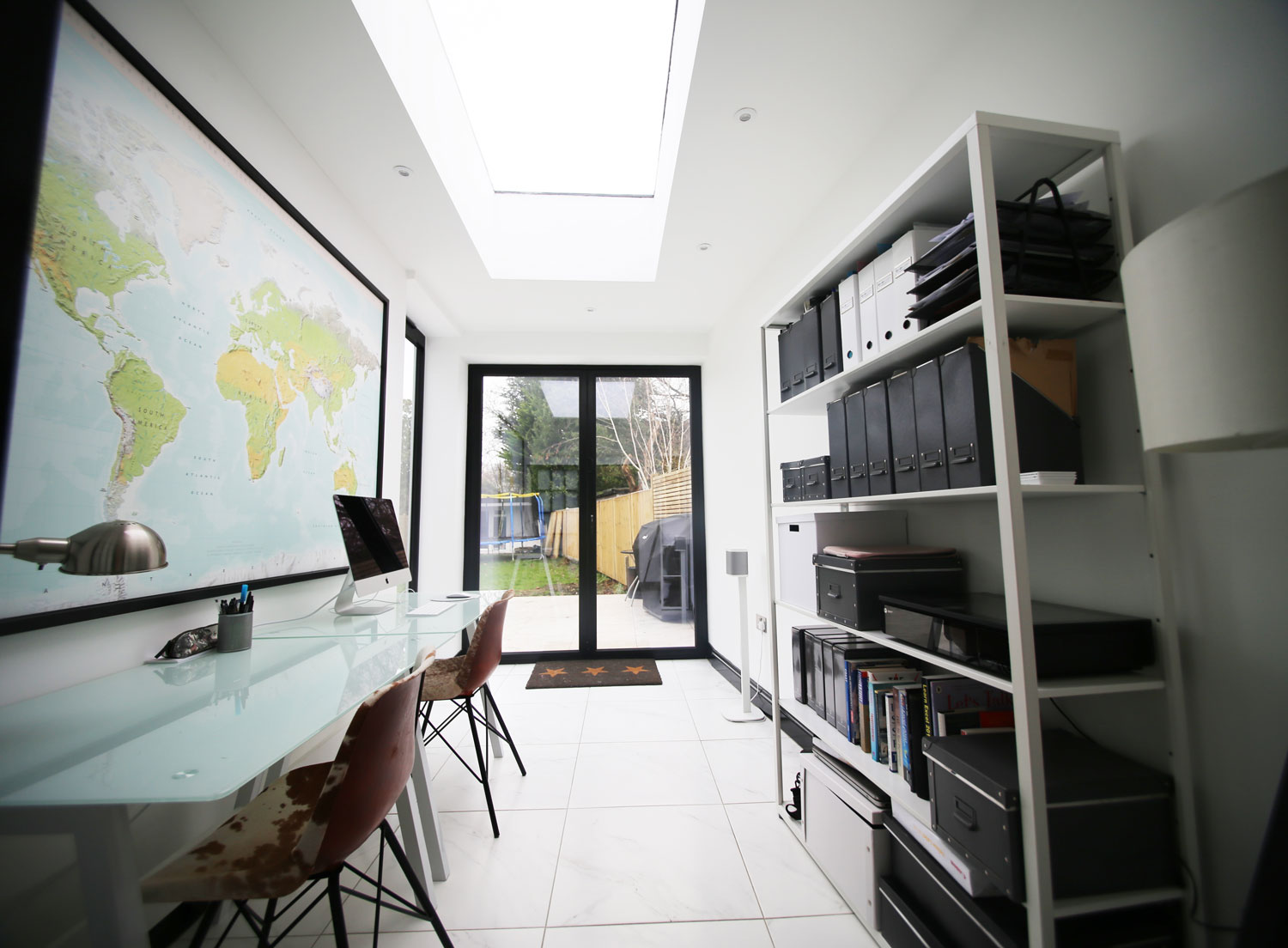
  • A garden room, gym, or office in the rear garden, or

  • Even a home spa or entertainment space — as long as it’s for use in connection with the main home.

Outbuildings can cover up to 50% of the total land around your property, including your garden, driveway, and side paths.

Most are kept under 30 square metres to avoid the need for full Building Control approval (which would increase build costs and complexity).

Logo

How Much Space Could You Add Overall?

Let’s add it up. Between a rear extension (around 21m²), a side extension (around 35m²), a loft conversion (up to 40m²), a garden outbuilding (30m²), and a front porch (3m²), it’s possible to add well over 100 square metres to your home — all without full planning permission.

That’s more than the entire footprint of many three-bedroom semi-detached homes!


Why Work with an Architectural Expert?

While permitted development gives you incredible freedom, the rules are precise and must be interpreted correctly. That’s where professional guidance is essential.

At Fluent Architectural Design Services, we’ve helped hundreds of homeowners across Surrey, Middlesex, Berkshire, and West London make the most of their permitted development rights — handling everything from design and measurements to planning certificates, building regulations, and structural calculations.

Our all-inclusive service ensures you have every approval and drawing ready, so your project can move smoothly from design to build.


Ready to Unlock Your Home’s Potential?

If you’d like to find out how big you can extend under permitted development, book your free consultation today. Our experts will assess your home’s potential and show you what’s possible — all within the rules, and without the red tape.

Logo

Permitted Development FAQs


Do I need a Certificate of Lawfulness for permitted development?

Technically, you don’t have to apply for a Certificate of Lawfulness — but we always recommend it.
This certificate is official proof from your local council that your extension fully complies with permitted development rules. It protects you from future disputes and is especially useful when you come to sell your home, as buyers and solicitors often ask for it.

At Fluent Architectural Design Services, we handle this process for you, ensuring every detail is compliant before submission.


Can I combine multiple extensions under permitted development?

Yes — in many cases, you can combine more than one type of permitted development project (for example, a side and rear extension, or a loft conversion and outbuilding).

However, the total volume and footprint limits still apply, and the designs must work together seamlessly.
Our experienced team can help you maximise your space while staying within the rules, making sure each element complements the other both structurally and visually.


Does every property have permitted development rights?

Not always. Some homes — particularly flats, maisonettes, and listed buildings, or those in conservation areas or Areas of Outstanding Natural Beauty — have restricted or removed rights.

If you’re unsure, we can check this for you as part of our free planning assessment, carried out by our in-house ex-local authority planning consultants.


Can I extend right up to my boundary?

In most cases, you’ll need to leave a small gap to comply with building regulations and to make construction practical.
Certain types of extensions, like double-storey rear additions, have strict setback requirements, such as being at least 2 metres from the boundary.

We’ll guide you through what’s achievable on your plot and tailor your design accordingly.


What’s the difference between permitted development and full planning permission?

Permitted development lets you carry out pre-approved types of work without applying for full planning permission.

Planning permission, on the other hand, is required when your proposed work exceeds the permitted size limits or involves major changes to your property’s appearance.

We can help you determine the most efficient route — whether that’s staying within permitted limits or applying for full permission to achieve your vision.


Do I need building regulations approval?

Yes — even if your project qualifies under permitted development, you’ll still need building regulations approval to ensure your extension is safe, structurally sound, and energy efficient.

As part of our all-inclusive service, we produce detailed building regulation drawings and structural calculations, and handle your Building Control submission on your behalf.

What’s the next step?

If you are interested in using any of our services or you would like some more information, get in touch using the button below.

Get in touch

Your planning and design partners

Logo Logo Logo