Adapting a Home for a New Wheelchair User | What You Need to Know - Fluent

0800 043 8838

Adapting a Home for a New Wheelchair User | What You Need to Know

Adapting a Home for a New Wheelchair User | What You Need to Know blog

When someone experiences a life-changing injury or develops a disability, one of the biggest challenges can be returning home.

The home that worked perfectly well before an accident or illness may suddenly become difficult to navigate. Stairs, narrow doorways, bathrooms, kitchens and even the route from the front door to the garden can all present new challenges.

But something many people don’t realise is that help may be available to adapt your home.

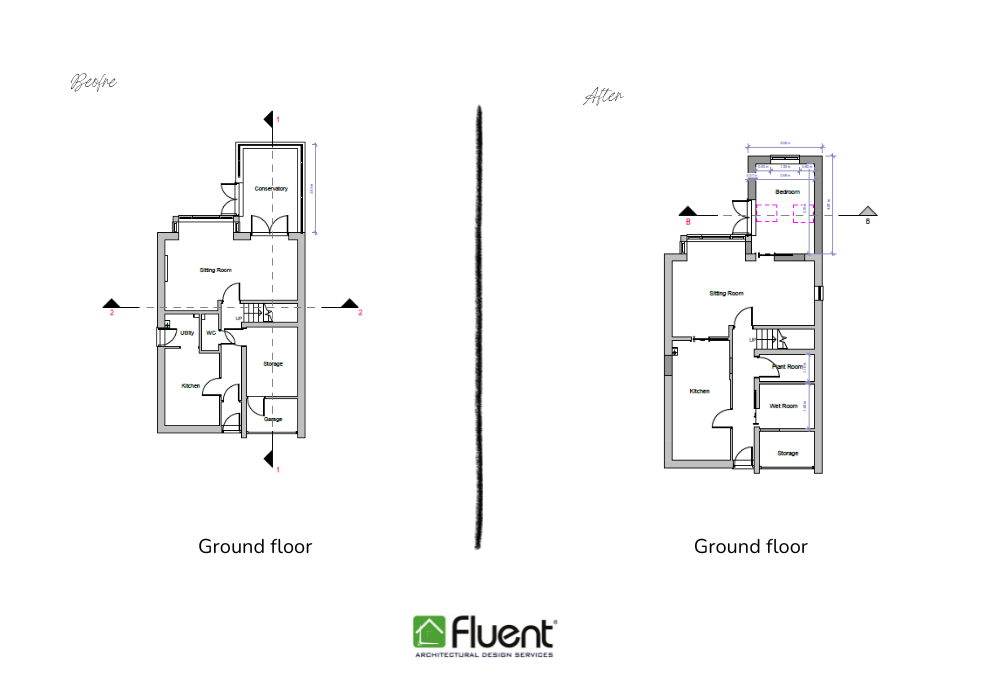
In our latest videos, we have been following a very personal example of this. After Paul’s father lost his leg, we looked at how his home could be redesigned around the way he now needs to live.

It has been a fascinating reminder that good adaptive design isn’t simply about making a house more accessible. It is about helping someone regain independence, feel confident in their own home and continue doing as much as possible for themselves.


Could the council help pay for adaptations?

In England, eligible disabled people may be able to apply for a Disabled Facilities Grant (DFG) through their local council.

The grant is designed to help towards the cost of essential adaptations that enable someone to live safely and independently in their own home.

Depending on the individual’s needs, adaptations can include:

  • Widening doors to make them easier to use with a wheelchair or mobility aid
  • Installing ramps or improving access into the property
  • Creating a level-access shower or wet room
  • Installing a stairlift
  • Improving access to the garden
  • Adapting kitchens and work surfaces
  • Improving heating or lighting controls
  • And, in some circumstances, carrying out larger building works such as an extension to provide a downstairs bedroom or bathroom.

The maximum mandatory Disabled Facilities Grant in England is currently £30,000, although individual councils may offer additional discretionary assistance depending on their local policies. The amount someone receives can also depend on their financial circumstances.


Why are councils interested in helping people adapt their homes?

This is perhaps the most important part of the conversation.

Home adaptations aren’t simply about improving a property. They can form part of a wider health and social care approach designed to help people remain independent.

Government guidance explains that adapting a home can help restore or enable independent living, privacy, confidence and dignity. It also recognises that appropriate adaptations can reduce the need for formal care and can sometimes make the difference between someone continuing to live in their existing home or needing alternative accommodation.

There is also a wider Home First approach to hospital discharge.

Where it is safe and appropriate, current NHS and government guidance encourages people to return to their own home and continue their recovery there, rather than remaining in hospital or moving straight into long-term residential care. As part of this process, health and social care teams can consider equipment and home adaptations when deciding what someone needs to return home safely.

So, for someone who has suddenly become disabled following an accident, illness or surgery, adapting the existing home can be an important part of helping them get home and regain independence.
 

Logo

How does the process work?

The first step is generally an assessment of the person’s needs.

You can contact your local council to ask for a home assessment. An Occupational Therapist or trained assessor may visit the property and look at how the person currently uses their home and what they are finding difficult.

This isn’t simply about looking at the building.

The assessment considers the individual and what they need to be able to do in their everyday life — whether that’s getting in and out of the house, using the bathroom, preparing food, moving between floors or accessing the garden.

The Occupational Therapist can then make recommendations about the adaptations that could help.

For larger adaptations, there may be several professionals involved, including the Occupational Therapist, council, Home Improvement Agency, surveyor or architect. Surrey’s own major adaptations process, for example, includes an OT assessment, feasibility work, architectural plans and review of the proposed scheme before the council confirms the grant position.


What if someone has only recently been discharged from hospital?

This is where things can become particularly important.

Current hospital discharge guidance places a strong emphasis on helping people return home safely where possible. Discharge teams can consider practical issues such as equipment and home adaptations as part of the assessment.

In some circumstances, local authorities can also use their housing assistance policies to provide urgent adaptations or hospital discharge assistance, particularly where relatively quick changes could help someone return home. Government guidance specifically highlights the use of streamlined processes for adaptations that can enable rapid discharge from hospital or prevent admission to hospital or residential care.

That doesn’t mean every adaptation will be funded or that every application will qualify. The person’s needs, the property, the proposed works and their financial circumstances all need to be considered.

But it does mean that if you or a family member suddenly needs to adapt their home following a serious injury or change in mobility, it is worth speaking to the council before assuming you have to fund everything yourself.


Adaptive design is about much more than ramps

One of the things we have learnt through Paul’s father’s project is that accessible design doesn’t have to look institutional.

A home can be adapted around the individual while still feeling like a comfortable, attractive family home.

Good design might mean thinking about:

  • How someone gets through the front door
  • Where they can safely turn or manoeuvre
  • How they move between rooms
  • Where they sit when getting dressed
  • How they use the kitchen
  • The height and position of worktops and appliances
  • Bathroom layouts and transfer space
  • Access to the garden
  • Lighting and controls
  • Storage that can be reached easily
  • Future changes in mobility

The best solutions are often the ones that become part of the architecture rather than looking like something that has simply been added afterwards.


Planning an adaptation? Get the right advice early

If significant building work is required, there can be a number of different considerations alongside the grant process.

Planning permission may be required depending on the proposal, while Building Regulations, structural design and other approvals may also need to be considered.

It is also important to understand that you should not normally start the work before your Disabled Facilities Grant has been approved, as the government guidance makes clear that starting work can affect eligibility.

For larger projects, getting the right professionals involved early can help make sure the proposed adaptation is practical, compliant and genuinely designed around the person’s needs.


If you or a family member needs to adapt a home

If a disability, injury or change in mobility means your home is no longer working for you, the first step is to speak to your local council and ask about a home assessment and Disabled Facilities Grant.

You can also speak to an Occupational Therapist about the practical difficulties you are experiencing at home.

The support available varies depending on your circumstances and your local authority, but there may be more help available than you realise.

And importantly, adaptive design doesn’t mean compromising on the quality or character of your home.

With the right approach, your home can be made safer, more practical and more accessible while still feeling like your home.


Need help adapting your home?

If you’re adapting your home for yourself or a family member, we can help you understand what may be possible. From initial ideas and feasibility through to planning, Building Regulations and detailed design, our team can help create a home that works around your needs while still feeling like home.

Talk to Fluent today for a free, no-obligation consultation and let’s explore what could work for you.

What’s the next step?

If you are interested in using any of our services or you would like some more information, get in touch using the button below.

Get in touch

Your planning and design partners

Fluent on Facebook Fluent on Instagram Fluent on Pinterest